Development
Building Internal Tools That Your Team Will Actually Adopt
Internal tools fail when they ignore the people using them. Here is a practical guide to building bespoke internal software that sticks.
We use cookies to enhance your browsing experience and analyze our traffic. By clicking "Accept", you consent to our use of cookies. Learn more

Filtedev
WE CARE
An API-first approach future-proofs your software investment. Learn why the most successful digital products start with their integration layer.
The technical decisions made in the early stages of software development echo for years. Few decisions have more lasting impact than whether to adopt an API-first architecture. This approach, where the application programming interface is designed and built before the user interface, might seem like an unnecessary formality. In practice, it is the single most important architectural choice for software that needs to grow with a business.
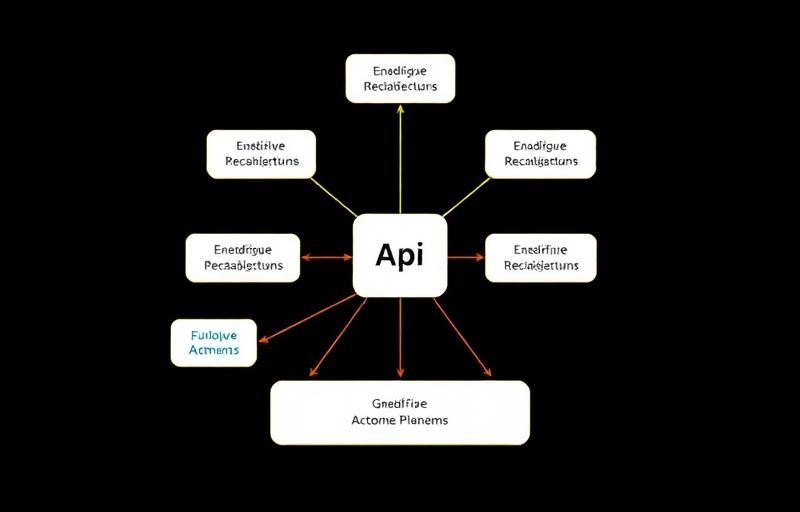
API-first architecture means that every piece of functionality in your software is accessible through a well-designed, well-documented API. The web interface, mobile app, third-party integrations, internal tools, and automated workflows all consume the same API. Nothing is built as a one-off. Nothing is hard-coded for a single use case.
This stands in contrast to the common approach where developers build features directly into the user interface, creating tightly coupled systems where the business logic is entangled with the presentation layer. These systems work initially but become increasingly expensive to modify, extend, and integrate as the business evolves.
An API-first architecture delivers several concrete business benefits. Integration flexibility means you can connect your software with any other system, whether it is a client's platform, a partner's API, or a new tool your team wants to adopt. You are never locked into a single ecosystem.
Multi-channel capability means the same backend can power a web app, a mobile app, a partner portal, and automated workflows simultaneously. Building a new channel does not require rebuilding the logic, only the interface.
Development velocity increases over time because new features can leverage existing API endpoints. Teams can work in parallel, with frontend and backend developers operating independently against a shared API contract.
Successful API-first implementations follow several principles. APIs should be designed around business domains, not database tables. Endpoint naming should reflect what the business does, not how the data is stored. Versioning should be explicit, allowing old clients to continue operating while new features deploy. Authentication and authorization should be granular, enabling different access levels for different consumers.
Documentation is not optional. An API without documentation is an API that only the person who built it can use. Automated documentation generation, interactive testing tools, and clear examples transform an API from a technical artifact into a business asset that enables partners, clients, and your own teams to build on your platform.
Internal tools fail when they ignore the people using them. Here is a practical guide to building bespoke internal software that sticks.
Best practices for building fast, responsive applications that users love.
A comprehensive comparison to help you make the right decision for your project.
Let's discuss how we can help bring your vision to life.