
Development
API-First Architecture: Building Software That Scales With Your Business
An API-first approach future-proofs your software investment. Learn why the most successful digital products start with their integration layer.
We use cookies to enhance your browsing experience and analyze our traffic. By clicking "Accept", you consent to our use of cookies. Learn more
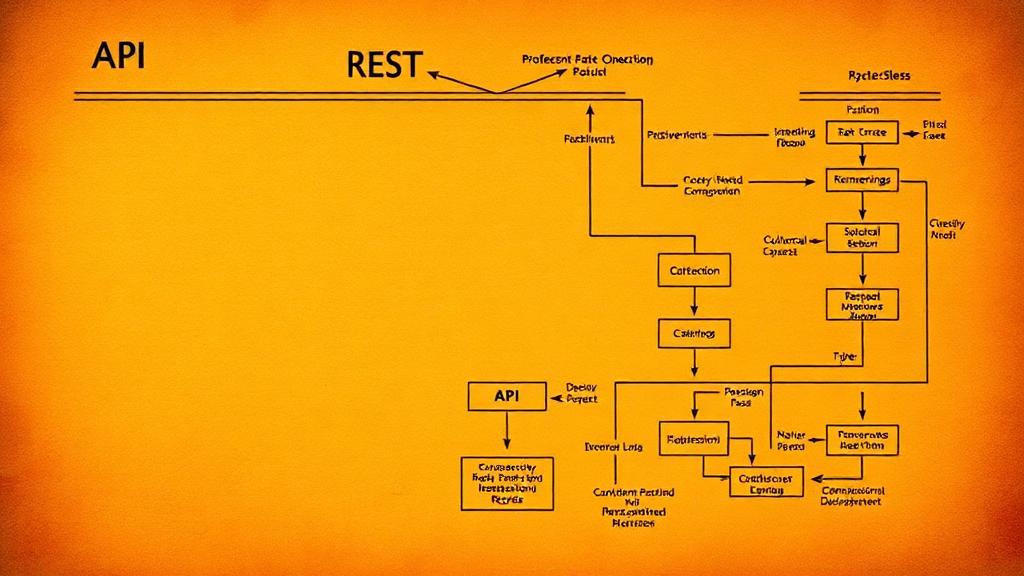
Build intuitive and maintainable APIs with these proven design principles.
Well-designed APIs serve as the foundation for modern software architecture. They enable mobile applications, third-party integrations, microservices communication, and single-page applications to function effectively. A thoughtfully designed API makes developers productive, reduces support burden, and enables your platform to grow. Conversely, poorly designed APIs frustrate developers, create maintenance nightmares, and limit what applications can achieve.
URL structure communicates the organization of your API and helps developers navigate its capabilities intuitively. Using nouns rather than verbs in URLs follows REST conventions and creates predictable patterns. The URL identifies the resource while the HTTP method specifies the action. This separation produces cleaner, more understandable endpoints.
Plural resource names establish consistency and avoid awkward constructions when dealing with collections versus individual items. Using users for both the collection and individual user endpoints eliminates decisions about when to pluralize. This consistency reduces cognitive load for developers learning your API.
Hierarchical relationships expressed through URL structure show connections between resources naturally. Nesting related resources, such as users slash user-id slash orders, makes relationships explicit and enables logical URL construction. However, excessive nesting creates unwieldy URLs. Limiting nesting to one or two levels keeps URLs manageable.
Consistent naming conventions across the entire API reduce friction for developers. Choosing between camelCase and snake_case matters less than applying the choice uniformly. Documenting naming conventions and adhering to them strictly prevents the confusion that arises from inconsistent patterns.
GET requests retrieve data without causing side effects. They should be safe to repeat any number of times and return the same results given unchanged underlying data. Caching works with GET requests because clients and intermediaries can assume that repeated requests return equivalent responses.
POST requests create new resources and may have side effects. They are not idempotent, meaning repeated calls may create multiple resources. POST endpoints typically return the created resource along with its new identifier and relevant metadata.
PUT and PATCH requests update existing resources through different approaches. PUT replaces a resource entirely and requires a complete representation. PATCH modifies only specified fields, reducing payload size and enabling partial updates. Choosing between them depends on update patterns your API needs to support.
DELETE requests remove resources. While seemingly simple, deletion requires careful consideration of related resources, soft versus hard deletion, and how deleted resources affect referencing data. Clear documentation of deletion behavior prevents surprises.
Consistent JSON structure across all endpoints reduces the learning curve for developers. Establishing conventions for success responses, error responses, and pagination early in API development creates predictable patterns that developers can rely upon. Wrapping responses in standard envelopes with consistent field names improves discoverability.
Meaningful HTTP status codes communicate outcome at a glance before developers parse response bodies. Using 200 for success, 201 for created, 400 for bad requests, 401 for authentication failures, 404 for missing resources, and 500 for server errors follows established conventions. Avoiding custom codes or non-standard meanings for standard codes prevents confusion.
Helpful error messages accelerate debugging and reduce support requests. Error responses should include a machine-readable code for programmatic handling, a human-readable message explaining what went wrong, and where possible, guidance on how to fix the problem. Vague errors like Something went wrong force developers to guess or contact support.
Pagination for collection endpoints prevents performance problems and enables efficient data access. Whether using offset-based, cursor-based, or keyset pagination, documenting the approach clearly and providing navigation links helps developers implement efficient clients. Including total counts where practical enables progress indicators and pagination controls.
Quality API design requires balancing developer experience, technical constraints, and long-term maintainability. Investing in thoughtful design upfront pays dividends through easier integrations, reduced support burden, and a platform that developers enjoy using. The best APIs feel natural and predictable, enabling developers to accomplish their goals with minimal friction.
An API-first approach future-proofs your software investment. Learn why the most successful digital products start with their integration layer.
Internal tools fail when they ignore the people using them. Here is a practical guide to building bespoke internal software that sticks.
Best practices for building fast, responsive applications that users love.
Let's discuss how we can help bring your vision to life.