
SaaS
SaaS Onboarding Best Practices
Create onboarding experiences that drive activation and reduce churn.
We use cookies to enhance your browsing experience and analyze our traffic. By clicking "Accept", you consent to our use of cookies. Learn more
Learn proven pricing models and tactics to optimize your SaaS revenue.
Pricing is one of the most important decisions for any SaaS business. The right strategy can dramatically impact your growth and profitability, yet many founders treat pricing as an afterthought, setting prices based on gut feel or competitor copying rather than strategic analysis.
The most effective pricing approach for SaaS companies is value-based pricing, where you price based on the value you deliver to customers rather than your costs or competitor prices. This requires deeply understanding what outcomes your customers achieve with your product and what those outcomes are worth to them.
Start by identifying the core problems you solve. What is the cost to your customers if they don't solve these problems? What alternatives do they have, and what do those alternatives cost in terms of money, time, and effort? When you understand the economic impact of your solution, you can price accordingly and capture a fair share of the value you create.
Value-based pricing also means different customers may derive different value from your product. An enterprise customer with thousands of users gets exponentially more value than a small team, which justifies higher pricing for larger organizations.
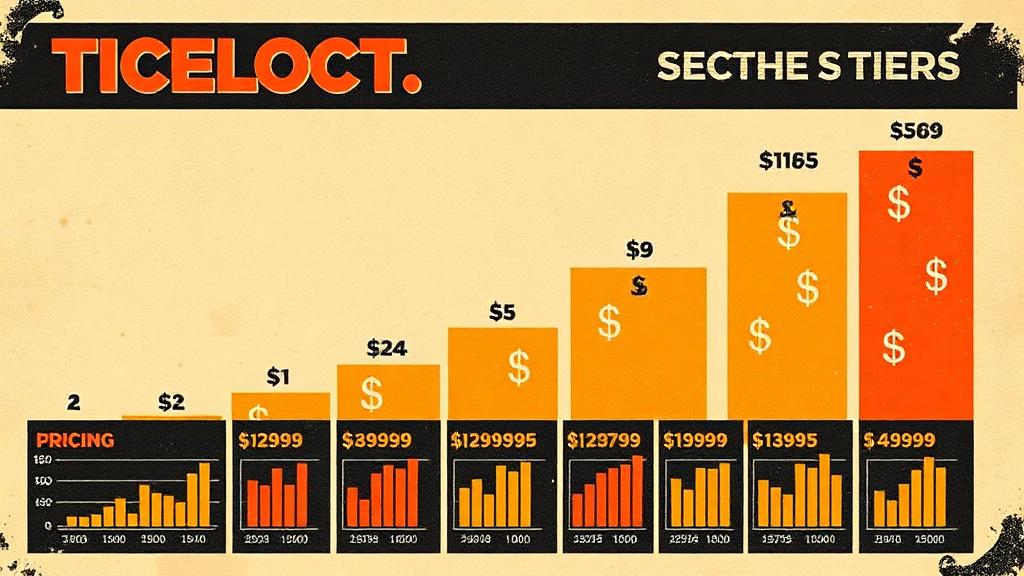
Most successful SaaS companies use tiered pricing to serve different customer segments. A well-designed tier structure typically includes three to four tiers, each targeting a distinct customer persona with different needs and budgets.
Your entry-level tier should remove barriers to adoption, offering enough value for individuals and small teams to get started and experience the product's benefits. This tier often serves as a conversion mechanism, getting users in the door so they can grow into higher tiers.
The middle tier is usually where most customers land. It should offer the best balance of features and price, representing the "default" choice for the majority of your target market. This is often highlighted as the "most popular" or "recommended" option.
Enterprise tiers cater to organizations with complex needs, compliance requirements, and larger budgets. These tiers typically include advanced security features, dedicated support, custom integrations, and service level agreements that justify premium pricing.
Many SaaS companies are adding usage-based elements to their pricing, creating a hybrid model that combines predictable subscription revenue with usage-based components. This approach aligns your pricing with the value customers receive and allows customers to start small and grow their spending as they derive more value.
Common usage-based metrics include API calls, data storage, active users, transactions processed, or compute resources consumed. The key is choosing metrics that correlate with the value customers receive and are easy for customers to understand and predict.
Usage-based pricing requires careful consideration of billing complexity, revenue predictability, and customer psychology. Many customers prefer predictable bills, so offering usage tiers or caps can provide the benefits of usage-based pricing while maintaining predictability.
Human psychology plays a significant role in purchasing decisions, and savvy SaaS companies leverage psychological principles in their pricing presentation. Anchoring with a premium tier makes your target tier appear more affordable by comparison. When customers see a $500 per month enterprise plan first, the $99 per month professional plan feels like a reasonable investment.
Charm pricing, using prices like $49 instead of $50, can increase conversions for lower-priced products, though this effect diminishes at higher price points where round numbers can actually convey quality and simplicity. Showing equivalent daily or per-user costs can make prices feel more manageable, and highlighting the savings from annual billing creates urgency and improves cash flow.
Pricing is not a set-it-and-forget-it decision. The most successful SaaS companies continuously test and refine their pricing based on market feedback, competitive dynamics, and customer behavior.
A/B testing different price points, tier structures, and pricing page designs can reveal opportunities for improvement. Customer interviews provide qualitative insights into how customers perceive value and make purchasing decisions. Analyzing conversion rates across cohorts and customer segments helps identify where pricing may be creating friction or leaving money on the table.
Your pricing should evolve as your product matures, your market expands, and your value proposition strengthens. Regular pricing reviews, at least annually, ensure your pricing remains aligned with the value you deliver and the competitive landscape.
Create onboarding experiences that drive activation and reduce churn.
Identify early warning signs and implement retention strategies that work.
Create a customer success framework that drives retention and expansion.
Let's discuss how we can help bring your vision to life.