Business
Custom Software vs Off-the-Shelf SaaS: When Building Your Own Makes Financial Sense
The build-vs-buy decision is more nuanced than most articles suggest. We break down the real cost calculus and when custom development pays for itself.
We use cookies to enhance your browsing experience and analyze our traffic. By clicking "Accept", you consent to our use of cookies. Learn more

Filtedev
WE CARE
Automation ROI goes far beyond time saved. Learn how to measure the full impact including error reduction, scalability, and employee satisfaction.
When leadership teams evaluate automation investments, the conversation typically starts and ends with time savings. "This will save our team twenty hours per week" is the standard pitch. But time savings, while real, represent only a fraction of automation's true return on investment.
The full value of workflow automation includes several categories that are often undervalued or entirely overlooked. Error reduction is perhaps the most significant. Manual processes carry inherent error rates, and in many businesses, the cost of a single error, a mis-shipped order, a billing mistake, a compliance violation, far exceeds the cost of the automation that would have prevented it.
Scalability value is another crucial dimension. Manual processes create linear cost growth: double the volume, double the staff needed. Automated processes create near-zero marginal cost growth: double the volume with the same infrastructure. For businesses with growth ambitions, this scalability premium is enormous.
Employee satisfaction and retention represent a third often-overlooked category. Talented people do not stay at companies that waste their skills on repetitive tasks. The cost of replacing a skilled employee, typically estimated at one to two times their annual salary, dwarfs the investment in automation that keeps them engaged and productive.
To calculate automation ROI accurately, start with a comprehensive cost inventory of the current manual process. Include not just labor hours but also error rates and their associated costs, delay costs when bottlenecks slow downstream work, opportunity costs of staff time spent on manual tasks instead of strategic work, and compliance risk costs associated with human error.
Then estimate the automation investment including development costs, integration costs, testing, deployment, training, and ongoing maintenance. Most businesses underestimate maintenance costs, which typically run ten to twenty percent of initial development costs annually.
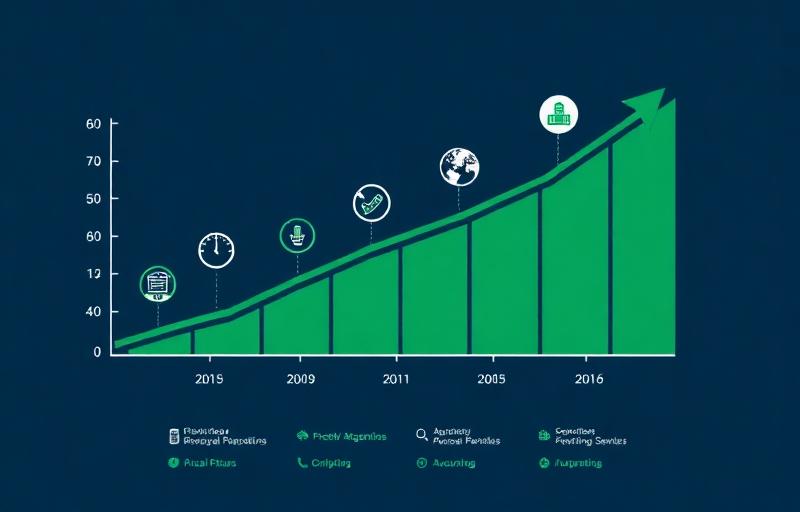
The ROI calculation should project over a three to five year horizon, accounting for the fact that automation costs are primarily front-loaded while benefits compound over time. A well-built automation that costs fifty thousand dollars to develop might save two hundred thousand in its first year and increasingly more in subsequent years as the business grows.
Not all automations deliver equal returns. The highest-ROI targets typically share characteristics: high volume, high error cost, significant downstream impact, and involvement of data transfer between systems. Start with these high-impact opportunities, prove the value, and use the returns to fund the next round of automation investment.
The build-vs-buy decision is more nuanced than most articles suggest. We break down the real cost calculus and when custom development pays for itself.
Technical debt silently drains budgets and slows growth. Learn how to identify, quantify, and strategically address it before it becomes a crisis.
How a high-quality website can transform your brand perception and drive growth.
Let's discuss how we can help bring your vision to life.