
Business
Custom Software vs Off-the-Shelf SaaS: When Building Your Own Makes Financial Sense
The build-vs-buy decision is more nuanced than most articles suggest. We break down the real cost calculus and when custom development pays for itself.
We use cookies to enhance your browsing experience and analyze our traffic. By clicking "Accept", you consent to our use of cookies. Learn more
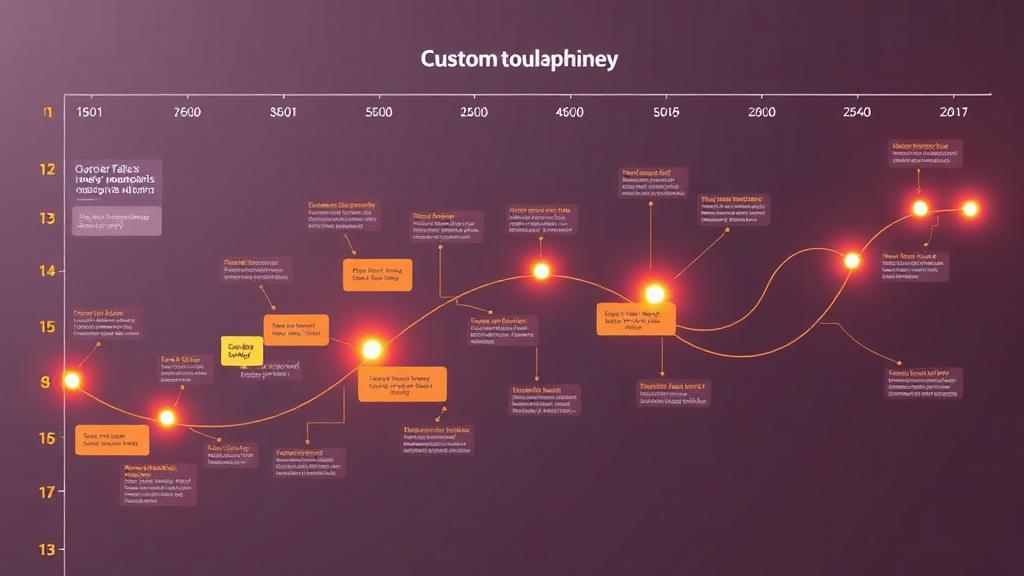
How to understand and optimize every touchpoint with your customers.
Customer journey mapping reveals how people actually experience your business rather than how you think they do. This disconnect between assumption and reality is precisely where most businesses lose customers without ever understanding why. Understanding the complete journey from first awareness through loyal advocacy transforms how you design experiences and allocate resources.
Traditional sales funnels show a linear path from awareness through interest to decision and action. Reality is far messier than these simple models suggest. Customers enter at different stages depending on how they discover you. They move backward and forward as they gather information and reconsider options. They interact across multiple channels, sometimes simultaneously. Each customer has unique needs and motivations that shape their path. Emotion plays a role at every step, influencing decisions in ways that pure logic would not predict.
Journey mapping captures this complexity to create more human-centered experiences. A complete customer journey map documents who your customers are through detailed personas. It shows what stages they move through in their relationship with your business. It reveals what they actually do at each stage, what they think and feel, what channels they use, what pain points they experience, and what opportunities exist for improvement.
Journey mapping reveals friction points that remain invisible from inside your business. Confusing navigation on your website that seems obvious to internal staff may baffle newcomers. Gaps between sales promises and delivery experience erode trust. Slow response times frustrate customers who expected quick resolutions. Missing information at critical decision points causes abandonment. Handoffs between departments drop important context.
Limited resources require focus, and journey maps help you see which touchpoints matter most. Understanding the impact of each pain point enables prioritized action. Quick wins can be distinguished from major investments requiring longer timelines. Journey maps build consensus around priorities by giving teams shared understanding. Data-informed decisions replace opinion-based debates.
Different departments naturally see different pieces of the customer experience. Marketing focuses on awareness and interest. Sales concentrates on consideration and decision. Support handles post-purchase experience. Product development sees usage patterns. Journey mapping creates shared understanding across these silos, aligning everyone around the complete customer experience rather than their individual slice.
Creating effective journey maps begins with defining your personas clearly. Understand the demographics and characteristics of your main customer types. Identify the goals they are trying to achieve and the problems they are trying to solve. Learn how they prefer to interact with businesses and what matters most to them in their decision-making process. Create two to four distinct personas representing your main customer types to keep mapping manageable while capturing important variation.
Identify the stages customers move through in their relationship with your business. The awareness stage begins when customers recognize a need or problem. Research follows as they explore potential solutions. Consideration involves evaluating specific options against each other. Decision narrows to choosing a solution. Purchase completes the transaction. Onboarding introduces customers to actually using what they bought. Usage encompasses the ongoing experience of extracting value. Advocacy emerges when satisfied customers recommend you to others. Adapt these stages to match your specific business model.
Document every interaction point between customers and your business. Include your website pages, social media channels, email communications, advertising encounters, phone and chat conversations, in-person interactions, physical mail and packaging, and third-party reviews and mentions. Be exhaustive in this inventory because hidden touchpoints that seem insignificant often matter most to customers.
At each touchpoint, capture the complete customer experience. Document what actions the customer is taking, what they are thinking at that moment, how they are feeling emotionally, what frustrates them, and how the experience could be better. Base this on actual customer research through interviews, surveys, and analytics rather than internal assumptions about what customers experience.
Identify moments of truth where customer experience disproportionately shapes overall satisfaction. First impressions of your brand set expectations for everything that follows. Problem-solving during research determines whether customers see you as helpful. Pricing transparency during decision-making builds or breaks trust. Delivery experience after purchase confirms whether promises were kept. First use of your product determines whether customers become advocates or detractors. Support interactions when things go wrong reveal your true character.
Quantitative data reveals patterns across large numbers of customers. Website analytics show paths through your site and points where visitors drop off. Email engagement data reveals what content resonates. Conversion rates by stage identify where the journey breaks down. Customer satisfaction scores quantify sentiment. Support ticket analysis reveals common problems. Sales cycle length indicates friction in the consideration process.
Qualitative research provides context that numbers alone cannot capture. Customer interviews uncover motivations and frustrations in rich detail. User testing sessions show how people actually interact with your systems. Survey open-ended responses reveal themes in customer thinking. Support conversation analysis shows how problems manifest in real situations. Social media listening captures unsolicited feedback. Sales team feedback provides frontline perspective on customer concerns.
Observational research watches real behavior in context. Screen recordings reveal exactly how users interact with digital touchpoints. In-store observation shows physical journey behavior. Usability testing uncovers interface problems. Mystery shopping evaluates experiences as customers encounter them. Customer shadowing follows the complete journey in context.
Rate each improvement opportunity across multiple dimensions to prioritize effectively. Consider the impact on customer experience, the effort required to implement, the number of customers affected, and the urgency of the pain point. Start with high-impact, lower-effort improvements that can demonstrate value quickly.
Quick wins often require no major investment. Website copy clarity can be improved with careful editing. Email response templates can be refined to address common concerns. FAQ and help content can anticipate frequent questions. Form simplification removes unnecessary friction. Communication timing can be optimized to match customer expectations.
Strategic investments require more resources but address fundamental issues. Website redesign may be necessary when existing architecture cannot support needed improvements. New technology implementation enables capabilities that current systems lack. Process redesign addresses organizational friction. Team training builds capabilities for better customer service. Product improvements resolve issues that customer-facing changes cannot address.
Journey maps should evolve as customer expectations and your business change. Quarterly reviews keep key metrics current. Annual comprehensive updates ensure maps reflect actual customer experience. Post-launch assessments evaluate how changes affected the journey. Competitor monitoring reveals shifts in customer expectations based on experiences elsewhere.
Companies that master journey mapping create experiences that feel effortless to customers. They anticipate needs before customers articulate them. They recover gracefully when problems occur. They build emotional connections that transcend transactions. They turn customers into advocates who actively recommend the business to others.
The build-vs-buy decision is more nuanced than most articles suggest. We break down the real cost calculus and when custom development pays for itself.
Automation ROI goes far beyond time saved. Learn how to measure the full impact including error reduction, scalability, and employee satisfaction.
Technical debt silently drains budgets and slows growth. Learn how to identify, quantify, and strategically address it before it becomes a crisis.
Let's discuss how we can help bring your vision to life.