
SaaS
SaaS Pricing Strategies That Maximize Revenue
Learn proven pricing models and tactics to optimize your SaaS revenue.
We use cookies to enhance your browsing experience and analyze our traffic. By clicking "Accept", you consent to our use of cookies. Learn more
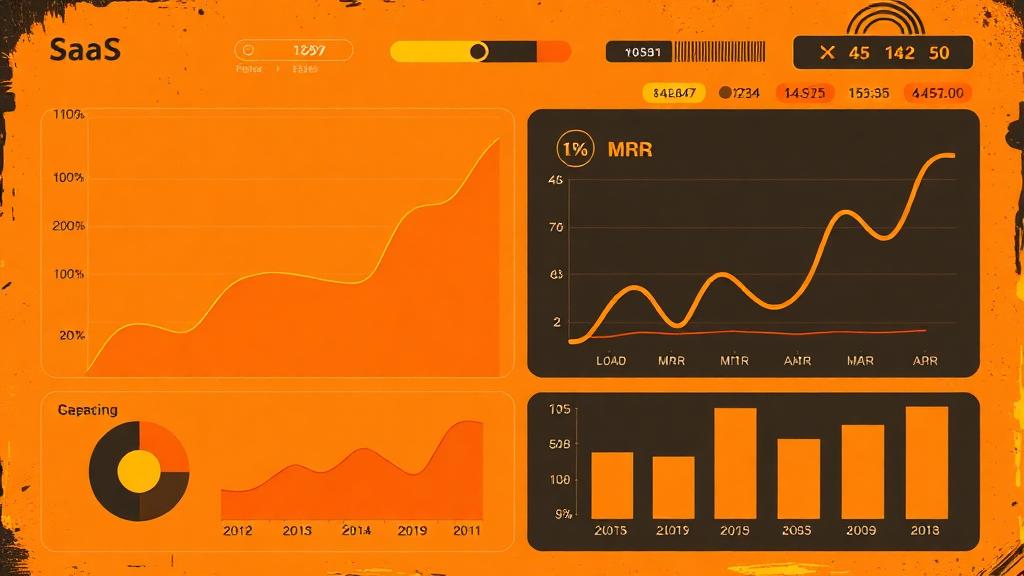
Understand the key metrics that drive SaaS business decisions.
Understanding your metrics is crucial for making informed business decisions and attracting investors. SaaS businesses live and die by their numbers, and the right metrics illuminate what's working, what's broken, and where opportunities lie. This guide covers the essential metrics every SaaS founder should track and understand.
Monthly Recurring Revenue is the heartbeat of a SaaS business. MRR represents predictable revenue that you expect to receive each month from active subscriptions. Understanding MRR requires breaking it down into components.
New MRR comes from new customers who signed up during the period. This measures your acquisition engine's effectiveness. Expansion MRR represents additional revenue from existing customers through upgrades, add-ons, or seat expansion. Strong expansion indicates product-market fit and customer success.
Churned MRR is revenue lost from customers who cancelled or downgraded. Tracking churn separately from new and expansion revenue reveals whether you're growing efficiently or just running to stand still.
Net New MRR combines these components into a single growth metric. Positive net new MRR means you're growing, negative means you're shrinking, and the magnitude indicates velocity.
Annual Recurring Revenue, calculated as MRR multiplied by twelve, is useful for businesses with annual contracts and for communicating scale to investors.
Customer Acquisition Cost measures how much you spend to acquire each new customer. Calculate it by dividing total sales and marketing costs by the number of new customers acquired during the same period. This includes salaries, advertising, tools, and overhead.
Customer Lifetime Value represents the total revenue you expect from a customer over their entire relationship with your company. Calculate LTV by multiplying average revenue per user by gross margin and customer lifetime.
The LTV to CAC ratio is perhaps the most important efficiency metric in SaaS. This ratio indicates whether you're acquiring customers profitably. A ratio of at least three to one is generally considered healthy, meaning customers generate three times the revenue they cost to acquire. Ratios below one indicate you're losing money on acquisition, while very high ratios might suggest you're under-investing in growth.
Month-over-month growth rate shows how quickly your business is expanding. Calculate it by dividing the difference between this month and last month by last month's MRR. Consistent double-digit monthly growth is often cited as a benchmark for high-growth SaaS.
The Quick Ratio provides a more nuanced view of growth quality. Calculate it by dividing new MRR plus expansion MRR by churned MRR plus contraction MRR. A Quick Ratio above four indicates robust, healthy growth where new and expansion revenue far outpaces losses. Lower ratios suggest you're working hard just to maintain current revenue.
Daily, weekly, and monthly active users reveal how engaged your user base is. The ratios between these metrics indicate stickiness. A product with high daily-to-monthly active user ratio is being used habitually.
Feature adoption rates show whether users are discovering and using capabilities beyond the basics. Low adoption of key features might indicate usability issues or onboarding gaps.
Session duration and frequency provide additional texture on engagement patterns. Understanding how users interact with your product informs both product development and customer success strategies.
Metrics only have meaning in context. Understanding how your numbers compare to industry benchmarks helps identify strengths and weaknesses.
Benchmark sources include industry reports, investor analyses, and peer conversations. Keep in mind that benchmarks vary by company stage, market segment, and business model. Early-stage companies have different profiles than mature ones, and self-serve models differ from enterprise.
Learn proven pricing models and tactics to optimize your SaaS revenue.
Create onboarding experiences that drive activation and reduce churn.
Identify early warning signs and implement retention strategies that work.
Let's discuss how we can help bring your vision to life.